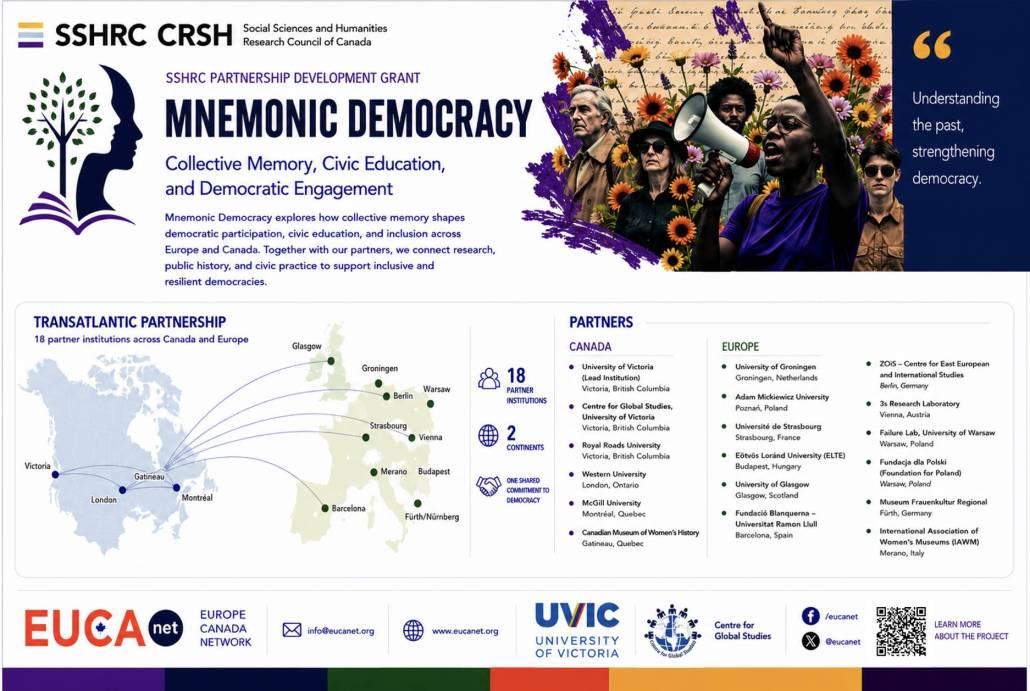
New SSHRC Project: Mnemonic Democracy: Collective Memory, Civic Education, and Democratic Engagement
SSHRC Partnership Development Grant (2026–2028)
Mnemonic Democracy
Collective Memory, Civic Education and Democratic Engagement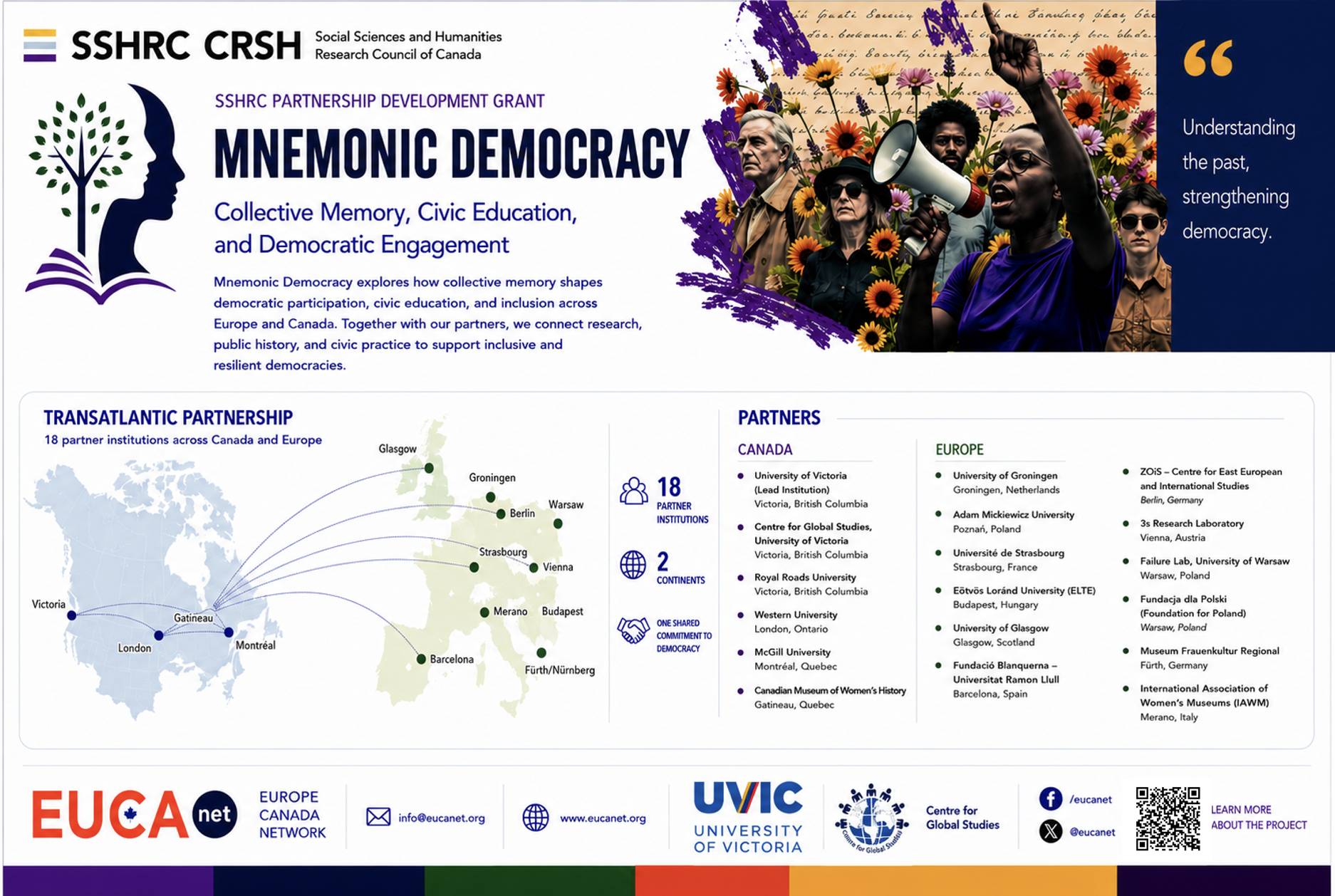
| Funding | Duration | Partners | Focus |
|---|---|---|---|
| $200,000 SSHRC PDG | 2026–2028 | 15+ institutions in 8 countries | Memory • Democracy • Civic Education |
Democracy is one of humanity’s greatest achievements.
Universal suffrage, women’s rights, minority protection, workers’ rights, welfare states and peaceful reconciliation are the result of long democratic struggles. Yet these achievements cannot be taken for granted. Increasing polarization, democratic backsliding, and contested historical narratives remind us that democracy depends not only on institutions but also on how societies remember their past.
The SSHRC Partnership Development Grant Mnemonic Democracy brings together researchers, museums, archives, educators, and civil society organizations from Canada and Europe to explore how collective memory can strengthen civic education, democratic participation, and social inclusion.
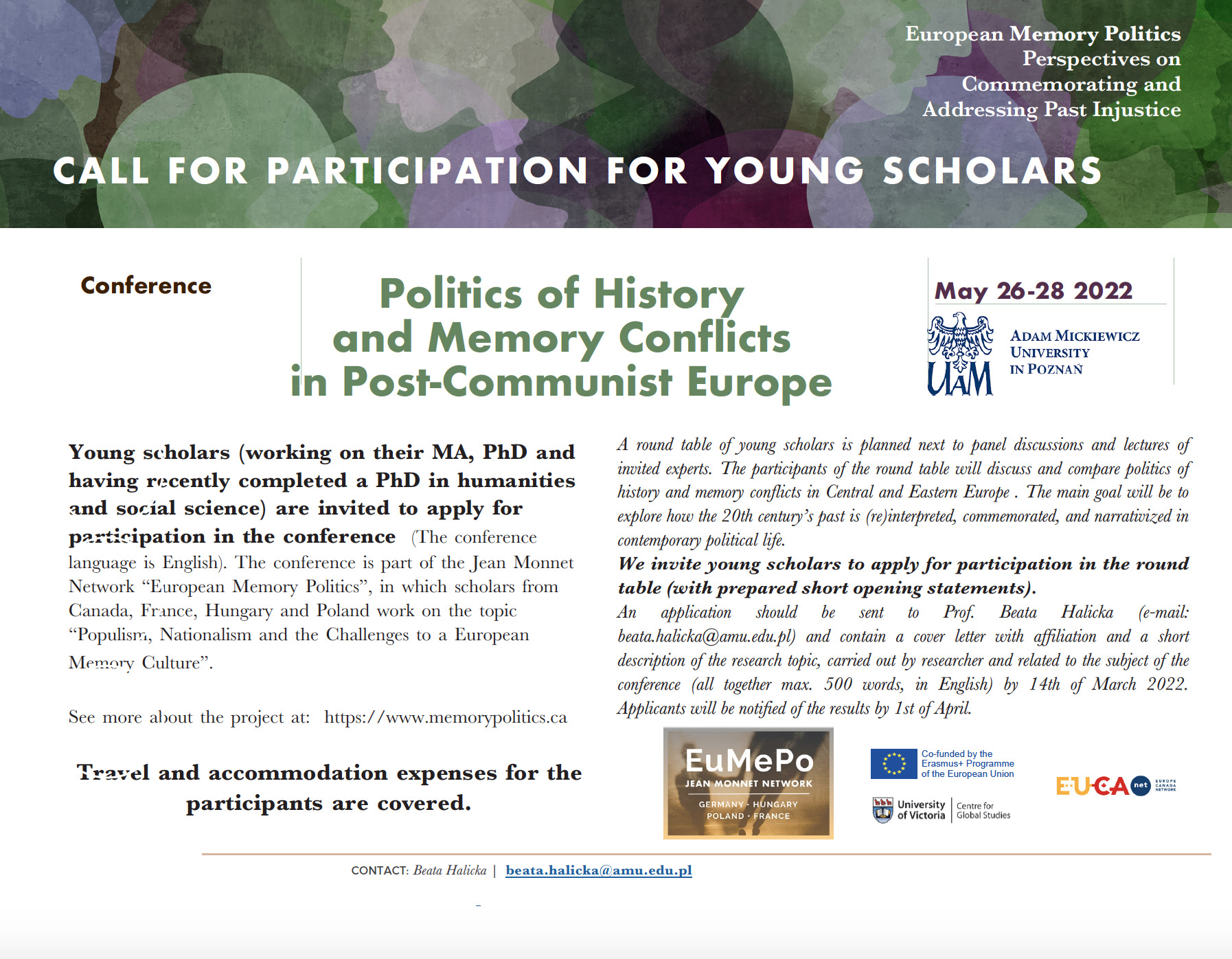
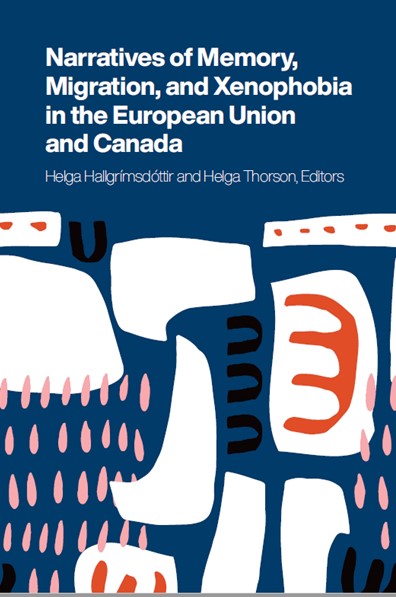
Building on previous EUCAnet projects on democracy, populism, migration, and European integration, this initiative develops a transatlantic network dedicated to understanding how memory can contribute to democratic resilience.
The project is organized around three interconnected research streams:
- Memory Policy & Civic Education – examining how civic and public institutions shape democratic memory.
- Civil Society & Gendered Memory – exploring grassroots initiatives, inclusive remembrance, and community-based democratic engagement.
- Digital Memory & Disinformation – investigating digital memory spaces, AI, disinformation, and the role of technology in shaping democratic knowledge.
Through Memory Labs, museum collaborations, policy dialogues, digital resources, exhibitions, public lectures, and a Young Researchers Network, Mnemonic Democracy connects academic research with civic practice to strengthen democratic participation across generations.
Building on earlier EUCAnet and Centre for Global Studies initiatives on democracy, populism, migration, and European integration, the project establishes a transatlantic network dedicated to advancing collective memory as a foundation for democratic renewal.
What We Do:
→ Comparative Research
→ Memory Labs & Museum Partnerships
→ Civic Education
→ Digital Innovation & AI
→ Policy Dialogue & Civil Society
→ Transatlantic Knowledge Exchange